
Dissemination Event in Cologne | YW-MED
How can youth exchanges become spaces where everyone truly feels they belong?
On 4 March 2026, part of our team organised a dissemination workshop in Cologne to share insights from a recent project meeting in Athens and discuss how international youth exchanges can become more inclusive environments.
Together with participants from diverse backgrounds in social studies, teaching, project management and psychology, the workshop explored practical ways to remove barriers to participation, with particular attention to the experiences of LGBTQIA+ youth. The discussion was guided by the idea that inclusion means actively removing barriers rather than expecting individuals to adapt to existing structures.
Using a participatory Mind Map Rotation method, participants rotated through five topics: belonging and safety, language and communication, group dynamics and power, organisational structures, and handling incidents. The goal was to identify barriers, share good practices and raise practical questions from youth work practice.
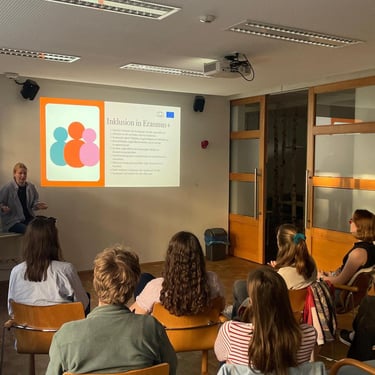
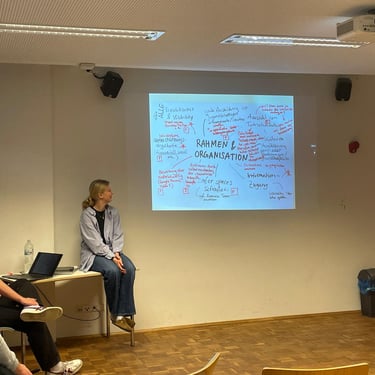
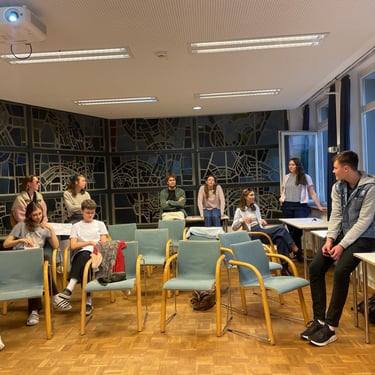

What stuck with us was the extremely high motivation of all participants showing deep care and passion for the topic.
Other than that there were some key aspects we learned that we'd like to share:
- Establish shared group agreements early, including respectful communication and clear boundaries, to strengthen psychological safety.
- Provide visible support structures such as contact persons, safer spaces, and quiet rooms. Short daily check ins can help identify challenges early.
- Facilitate group dynamics carefully. Confident participants often gain informal influence, so structured participation methods and rotating responsibilities can help ensure everyone is heard.
- Address language barriers through clear facilitation, translation support, and communication guidelines.
- Create transparent procedures for reporting discrimination or conflict, including confidential reporting options and trained facilitators.
Participants also emphasised that accessibility begins before the exchange itself. Transparent information, simple application processes, and proactive outreach can significantly influence who feels able to participate.
Inclusive youth exchanges do not happen automatically. They require intentional programme designed thoughtful facilitation that actively support participation and belonging.