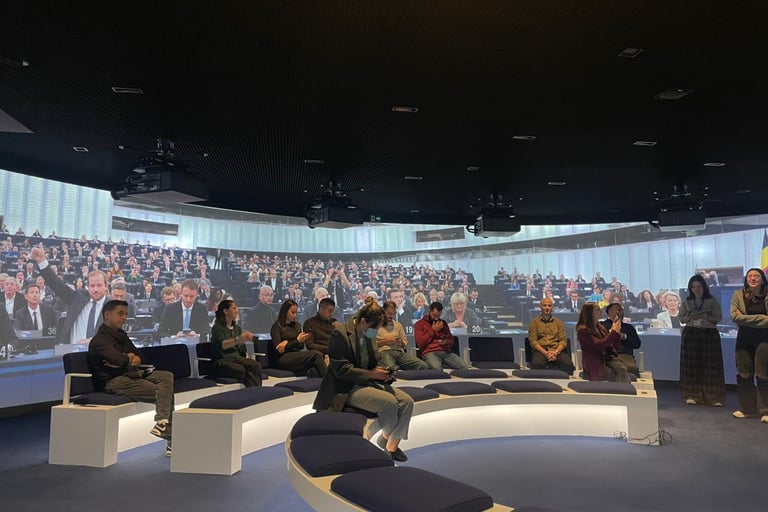
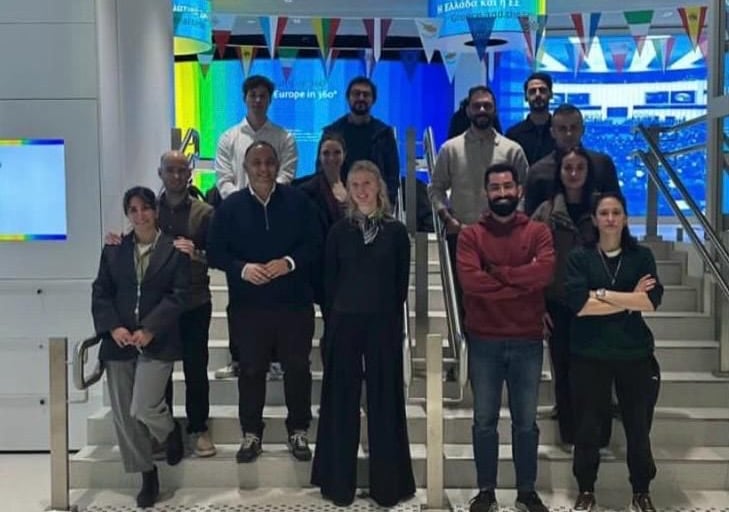
YW-MED Athens
Wrapping up the YW-MED project with inspiring discussions and new connections
YW-MED Project Closure in Athens, Greece
Coming back from Athens we were reflecting on our time and stopped to think about one question: is it really necessary to travel that much to establish productive partnership activities?
It is, actually. And even though that can be viewed from critical perspectives in times of climate change and an increasing awareness of the importance of green modes of transportation, we can't stop travelling. Because travelling actually strengthens democratic values.
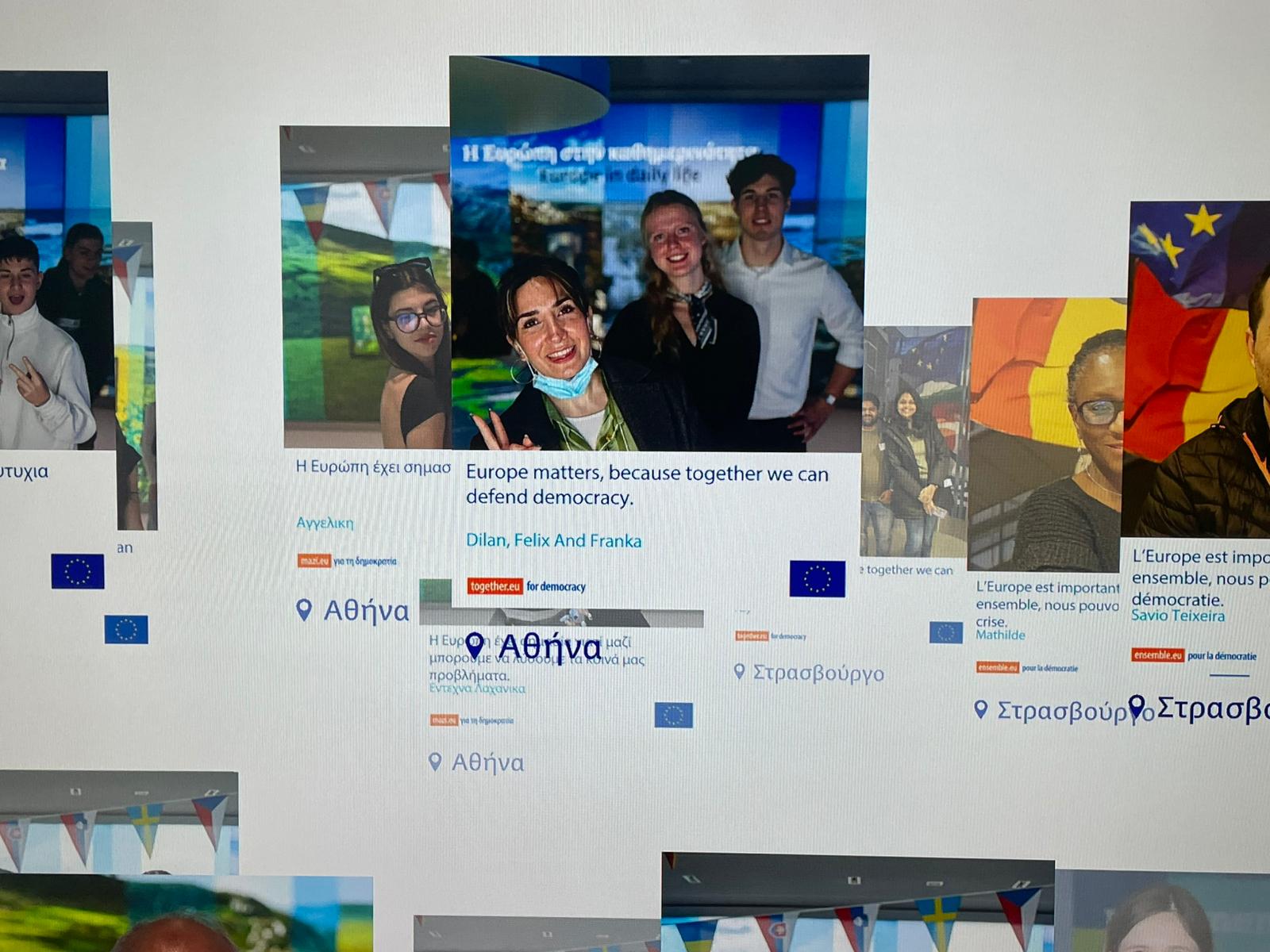
A central mechanism for that is social contact. Direct interaction between members of different groups can reduce prejudice and increase mutual understanding. This principle is known as intergroup contact theory (Alport, 1954). Meaningful contact between groups reliably reduces intergroup bias, especially when interactions are cooperative and occur under conditions of equal status (Pettigrew & Tropp, 2006). International mobility creates precisely these types of encounters, often in contexts where they would not otherwise occur.
Personal interaction also strengthens trust. Trust is a core requirement for democratic societies because cooperation and institutional legitimacy depend on it. Networks of real world interaction foster reciprocity, shared norms and collective action (Putnam, 2000). Our projects expand social networks across cultural and national boundaries, creating bridging ties between otherwise disconnected groups. These bridging connections are particularly important for social cohesion in diverse societies.
Face to face interaction has psychological qualities that digital communication cannot fully replicate. Direct encounters allow for nonverbal communication, emotional attunement, and immediate feedback. These processes support empathy, perspective taking, and mutual recognition, which are essential for democratic conflict resolution. Comparative research on social trust indicates that frequent interpersonal interaction is a significant predictor of generalized trust in others (Delhey & Newton, 2005).
Mobility further influences participation. Social networks activate engagement. Individuals are more likely to participate in civic and political processes when they are embedded in relational environments that encourage discussion, cooperation, and collective problem solving. At a time marked by polarization and digital fragmentation these networks remain a structural component of democratic resilience.